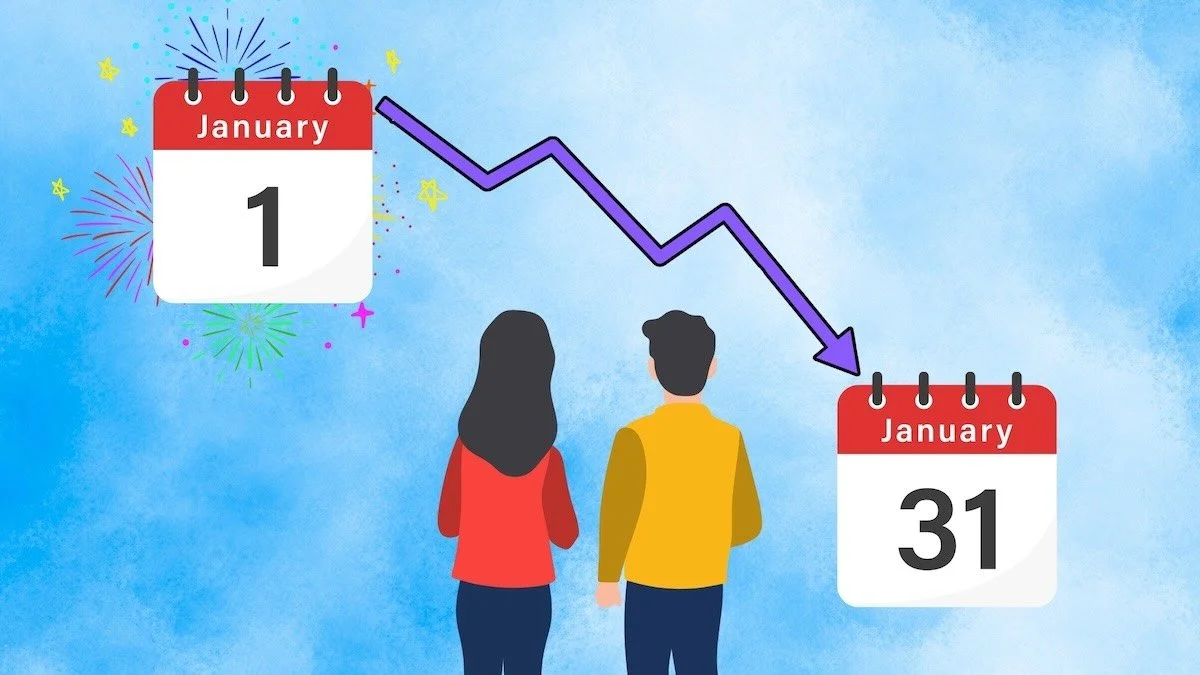
Every January, millions of people set ambitious goals, only to watch them fall apart by February. Learning how to keep New Year's resolutions isn't about relying on willpower. It comes down to shrinking your daily targets, tracking small wins, and building a friction-free routine that fits your actual life.
Here’s how to beat the failure rate and make your goals stick past January.
Key Takeaways
Focus on Systems, Not Just Goals: Setting big goals for the new year gives you direction, but building small daily habits is what actually gets you to the finish line.
Plan for Setbacks: Anticipating minor obstacles prevents one missed day from turning into totally giving up on your goals.
Beware of Quitter's Day: Knowing that resolution burnout peaks on the second Friday of January helps you proactively plan for the drop-off.
Beat the Slump: Overcoming New Year resolution failure starts with shrinking your daily commitments so small that it's almost impossible to fail.
Track the Momentum: Using a simple daily habit tracker app like Sunny Habits keeps consistency front-of-mind when initial motivation starts to fade.
Why Do So Many Resolutions Fall Apart?
If you've struggled with sticking to your plans past January, you’ve got plenty of company.
When looking closely at what percent of New Year's resolutions fail, research highlighted by Ohio State University shows that roughly 80% of resolutions are abandoned by February, with only 8% to 9% of people actually achieving their original year-long targets.
I was really surprised when I read that. Why is the failure rate so ridiculously high?
Most people feel initial excitement when they plan to start something new. And “new year, new you!” has such a nice ring to it. So because motivation is sky-high on January 1st, we create massive, total makeover-style New Year goals: hit the gym six days a week, read fifty books, quit sugar entirely or whatever complete overhaul you think you’d benefit from.
But motivation is fleeting, and isn’t a reliable strategy. When your schedule gets busy, or when you face the painful reality of hitting the gym before 7am in mid-January, relying on pure willpower can cause instantaneous burnout.

The Rise of "Quitter's Day"
The drop-off is so predictable that data analysts have pinpointed the exact day most people throw in the towel.
Known as Quitter's Day, this phenomenon marks the point in mid-January when motivation officially bottoms out. According to fitness trends shared by Strava, Quitter's Day typically falls on the second Friday of January – the exact point when early motivation bottoms out.
By this time, the initial high of the New Year has worn off, muscle soreness or fatigue sets in, and old routines begin creeping back. Interestingly, recognizing that Quitter's Day exists can actually be helpful. It reminds us that feeling a slump in mid-January is a universal human response, not a personal failure.
How to Keep Your New Year's Resolutions for the Long Haul
If you want to avoid the sadly common cycle of New Year resolution failure and push well past Quitter's Day, you need to change your approach from intensity to consistency. Here’s how to make your plans stick straight through to next December.
1. Scale Your Daily Goal Way Down
The biggest mistake people make with goals for the new year is starting too big. If your goal is to exercise for an hour every day, scale it down to five minutes of movement. If you want to read a book a week, commit to two pages a day. Two pages seems a lot more doable, right?
Shrinking your daily target removes mental resistance. On low-energy days, doing a quick 5-minute routine keeps the habit loop alive without exhausting you. And if you’re motivated to put more time or effort into that particular session, go for it!
2. Focus on One Habit at a Time
Trying to overhaul your diet, sleep schedule, career, and workout routine simultaneously will crash your system. So pick the one high-leverage habit that makes everything else easier – and master that before adding another.
3. Attach New Habits to Existing Routines
It's hard to remember (or actually do) a brand-new task out of nowhere. To make it easier, stack your new resolution onto something you already do automatically every day:
"After I pour my morning coffee, I’ll take a moment to write in my journal."
"Right after I drop my kid off at school, I’ll take a 15-minute walk."
"When I brush my teeth at night, I’ll do a quick 2-minute stretch."
A little while back, I wanted to start meditating regularly. But I had no motivation to actually sit down and do it. So I attached it to my regular yoga routine that I’d already established. I’d do my morning yoga, then before starting anything else I’d sit upright, turn on a guided meditation app, and zen out.
4. Keep Visual Track of Your Progress
Out of sight is out of mind. When life gets chaotic, simple habit reminders save your routines from slipping through the cracks. Using a gentle daily tracking tool like Sunny Habits makes building consistency effortless. Seeing your active streak grow creates subtle, rewarding momentum that keeps you motivated long after the New Year hype wears off.
What to Do When You Inevitably Slip Up
The real secret to how to keep your New Year's resolutions isn't never missing a day. It’s knowing how to recover when you do.
Many people view a missed workout or a diet that you cheated on as a total failure, which makes it easy to give up entirely. Don’t fall into that trap. Shift your mindset and remember that missing one day is just a quick pause, not the end. Make a rule for yourself: never miss twice in a row. If you miss a day, your only job the next day is to get back on track with a minimal, easy win.
Because let’s be honest. We’re all human and we’ll all miss a day.
5 Ways to Guarantee Resolution Success
Start Barely Big Enough to Notice: Make your daily target so tiny it requires zero willpower to accomplish.
Track Daily Streaks: Use visual cues or lightweight tools like Sunny Habits to mark off completed daily actions.
Try Not to Miss Two Days in a Row: Treat a missed day as a minor detour rather than a reason to quit.
Prepare for Obstacles: Identify your biggest routine disruptions (busy workdays, travel, low energy) in advance and plan scaled-down backups.
Reward Small Wins: Celebrate sticking to the routine itself, not just reaching the end result.

Frequently Asked Questions
What is Quitter's Day and when does it happen?
Quitter's Day is the date identified by habit researchers and data analysts when the majority of people abandon their New Year's resolutions. It usually occurs on the second Friday of January.
What percent of New Year's resolutions fail by February?
Studies show that approximately 80% of New Year's resolutions are dropped by the second week of February, largely due to setting unrealistically high initial targets without building supportive daily routines.
How long does it actually take to form a new habit?
While popular myth suggests 21 days, peer-reviewed research published in the European Journal of Social Psychology shows it takes an average of 66 days for a new behavior to become automatic. Focus on consistency rather than a super fast timeline.
How many goals should I set for the new year?
It is best to limit yourself to 1 to 3 primary goals. Focusing your energy on a single core routine yields far higher success rates than spreading your focus across a long list of changes.
Making Your Goals for the New Year Stick
Learning how to keep New Year's resolutions isn't about pushing through with sheer force. It's about building a friction-free routine that fits your actual life.
Keep your goals realistic, track your small daily wins, and focus on steady progress rather than overnight perfection. You’ve got this.