Building a healthy daily routine comes with a lot of buzzwords – from behavioral science concepts like habit stacking and automaticity to more practical terms like motivation and streaks. Whether you're trying to make a new habit stick or just understand the “two-minute rule,” knowing the lingo helps. Below is the official Sunny Habits Glossary of Habit-Building Terms, blending actual psychology with real-life examples.
Jump to a term: Accountable • Automaticity • Checklist • Consistent • Cue • Don’t Break the Chain • Goal • Habit Stack • Habit Tracker • Keystone Habit • Motivation • New Year’s Resolution • Perfect • Positive Reinforcement • Procrastinate • Repetition • Routine • Self-Care • Streak • System • Two-Minute Rule • Visualize • Weekly Goal
Accountable
(uh-KOUN-tuh-bul) | adjective
Being accountable means taking ownership of your commitments and answering to yourself – or an accountability buddy – for your follow-through. When another person is your accountability partner, it's a lot harder to skip your workout and not get asked about it.
Real-world example: Once Sally had established herself doing yoga three mornings a week, she no longer needed her friend to hold her accountable.
Automaticity
(aw-tuh-muh-TIS-ih-tee) | noun
Automaticity is the ability to perform a behavior effortlessly and without conscious thought. It usually comes after repeating it in the same context over a period of time. It’s essentially the mental autopilot that lets you brush your teeth or drive your regular commute without actively deciding on every single step.
Real-world example: Ines had practiced the piano so much that she could play the notes with automaticity.
Checklist
(CHEK-list) | noun
A checklist is a written list of planned steps, tasks, or items used to stay organized and make sure nothing gets forgotten. Checking off each completed box gives your brain a tiny hit of satisfaction.
Real-world example: Mom wrote a checklist of chores that she expected the kids to do, which they preferred to not do.
Consistent
(kuhn-SIS-tunt) | adjective
Being consistent means showing up and repeating a desired behavior reliably over time, including when your energy or enthusiasm dips. Staying consistent with small actions five days a week can create a strong routine and lead to personal growth.
Real-world example: Bill is consistent about eating his oats every day, which is good because he’s a horse.
Cue
(KYOO) | noun
A cue is an internal or external trigger (time of day, location, emotion, or specific action) that signals your brain to initiate a habit. Seeing your running shoes right by the front door is a visual cue designed to nudge you out for a jog, before you can talk yourself out of it.
Real-world example: When my nephew left muddy footprints on the floor, that was my cue to hand him the mop.
Don’t Break the Chain
(DOHNT BRAYK thuh CHAYN) | idiom
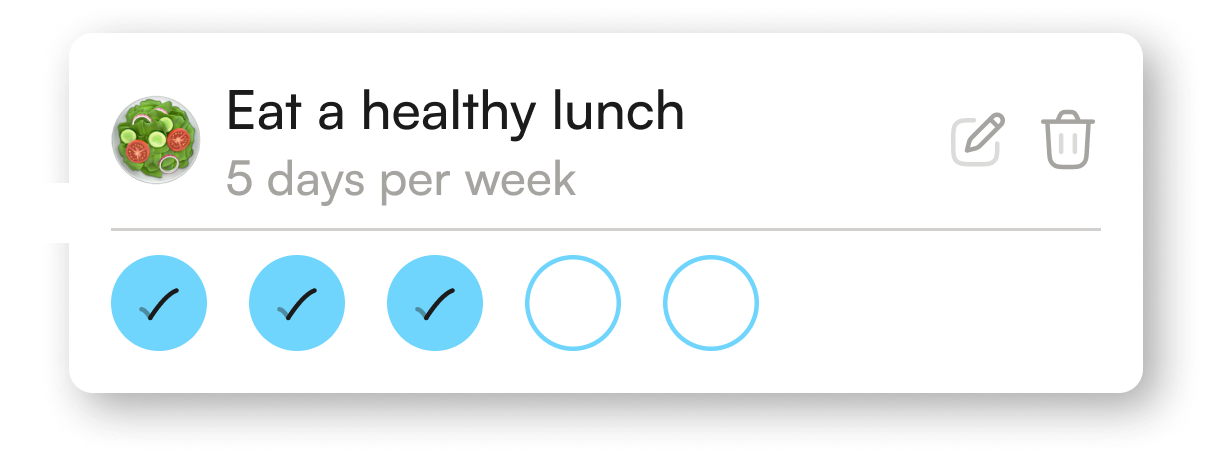
Don’t Break the Chain is a visual productivity method popularized by comedian Jerry Seinfeld. The idea is that you mark an "X" on a calendar every day that you complete a habit, which builds an unbroken visual streak. Once that chain of X’s grows longer, your natural aversion to ruining your streak keeps you going, even on days when you’d rather skip it.
Real-world example: I’m not in the mood to eat a healthy lunch today, but I’ll force myself to eat a salad so I don’t break the chain.
Goal
(GOHL) | noun
A goal is a specific, desired outcome or milestone that you aim to achieve, often within a set timeframe. While a goal gives you a clear direction to point toward, it’s your daily habits that actually get you to the finish line.
Real-world example: Mackenzie’s goal was to write the first draft of her novel by February 1, so she started a daily writing habit to get started.
Habit Stack
(HAB-it STAK) | verb
To habit stack means to anchor a new desired behavior onto an existing daily routine, so it happens automatically. You basically trick your brain into doing something productive by piggybacking on a habit you never forget, like washing your face right after brushing your teeth.
Real-world example: After Bethany started habit stacking, she’d practice learning a new language while walking the dog.
Habit Tracker
(HAB-it TRAK-er) | noun
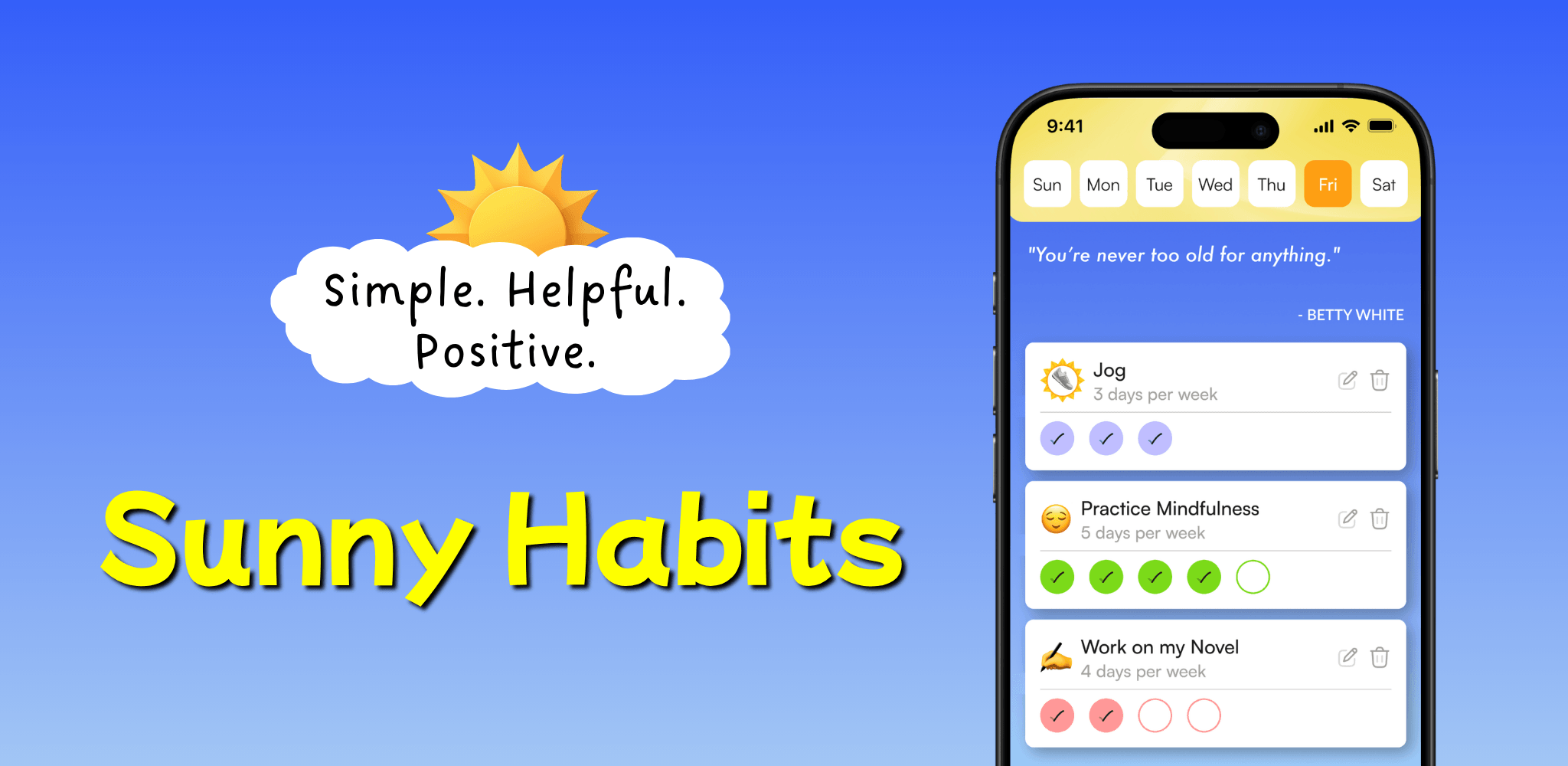
A habit tracker is a simple tool (like a calendar, notebook, or app) used to log whether you complete your daily habits. Seeing your progress laid out in front of you provides immediate visual proof of your progress and keeps momentum strong.
Real-world example: Using a habit tracker like the free Sunny Habits app helped me build new routines and see my growth.


Keystone Habit
(KEE-stohn HAB-it) | noun
A keystone habit is a single foundational routine that naturally triggers a positive ripple effect across other areas of your life. For instance, starting a daily walking habit often leads to better sleep, healthier food choices, and lower stress. The concept was coined by author Charles Duhigg in The Power of Habit.
Real-world example: After Biff started going to sleep earlier, this keystone habit’s ripple effects included making the bed, working out in the morning, and eating a healthy breakfast.
Motivation
(moh-tuh-VAY-shun) | noun
Motivation is the internal desire that drives you to take action toward a goal. Because motivation can fluctuate based on mood and other factors, relying on solid routines works much better than waiting to "feel inspired."
Real-world example: Maya found the motivation to try daily meditation after seeing how grounded it had made her cat.
New Year’s Resolution
(NOO YEERZ rez-uh-LOO-shun) | noun
A New Year’s Resolution is a personal promise made at the start of a new calendar year to adopt a positive habit or break an unwanted one. Most resolutions fizzle out by February because people expect “new year, new me!” excitement to motivate them, instead of building small, sustainable daily systems.
Real-world example: I made a New Year’s resolution to spend more time outdoors, but gave up because of how cold it was in January.
Perfect
(PER-fikt) | adjective
Being perfect means executing a habit or goal completely free of flaws, skipped days, or setbacks – an unrealistic standard that nobody can live up to. Chasing perfection is one of the fastest ways to quit a habit, since one missed day can trick you into thinking the whole effort is ruined.
Real-world example: Courtney thought she had to be perfect and never miss a day of her mindfulness habit, until she realized that being mindful most days was more than enough.
Positive Reinforcement
(POZ-ih-tiv ree-in-FORS-muhnt) | noun
Positive reinforcement is the practice of strengthening a habit by immediately following it with a pleasant reward. That instant payoff triggers a release of dopamine in your brain, teaching it to crave and repeat the habit in the future.
Real-world example: Every time Julie finished her homework, she’d eat a sweet treat as positive reinforcement.
Procrastinate
(proh-KRAS-tuh-nayt) | verb
To procrastinate is to delay or put off a task, usually in favor of something easier, more comfortable, or more fun. It happens in many areas of life including job duties, work around the house, and when establishing new behaviors.
Real-world example: Why go to your scheduled pilates class, when you procrastinate and watch Netflix on the couch instead?
Repetition
(rep-ih-TIH-shun) | noun
Repetition is performing a specific action over and over until the neural pathways behind it become strong and automatic. Every single rep builds up the new routine, making the next time a little bit easier than the last.
Real-world example: Marta built a habit of flossing nightly through repetition, which pleased her dentist mother.
Routine
(roo-TEEN) | noun
A routine is an intentional sequence of actions performed regularly in a specific order. It often requires conscious effort and planning. Over time and with enough repetition, the individual steps inside a routine can turn into effortless habits.
Real-world example: I enjoy my morning routine of making the bed, brushing my teeth, and having a comically large soy latte.
Self-Care
(SELF-KAIR) | noun
Self-care means taking intentional, proactive steps to protect and improve your physical, mental, and emotional well-being. It’s less about expensive spa days and more about everyday basics like getting enough sleep, journaling, or stepping outside for fresh air.
Real-world example: Tallulah practices self-care by taking a short walk when she feels burned out.
Streak
(STREEK) | noun
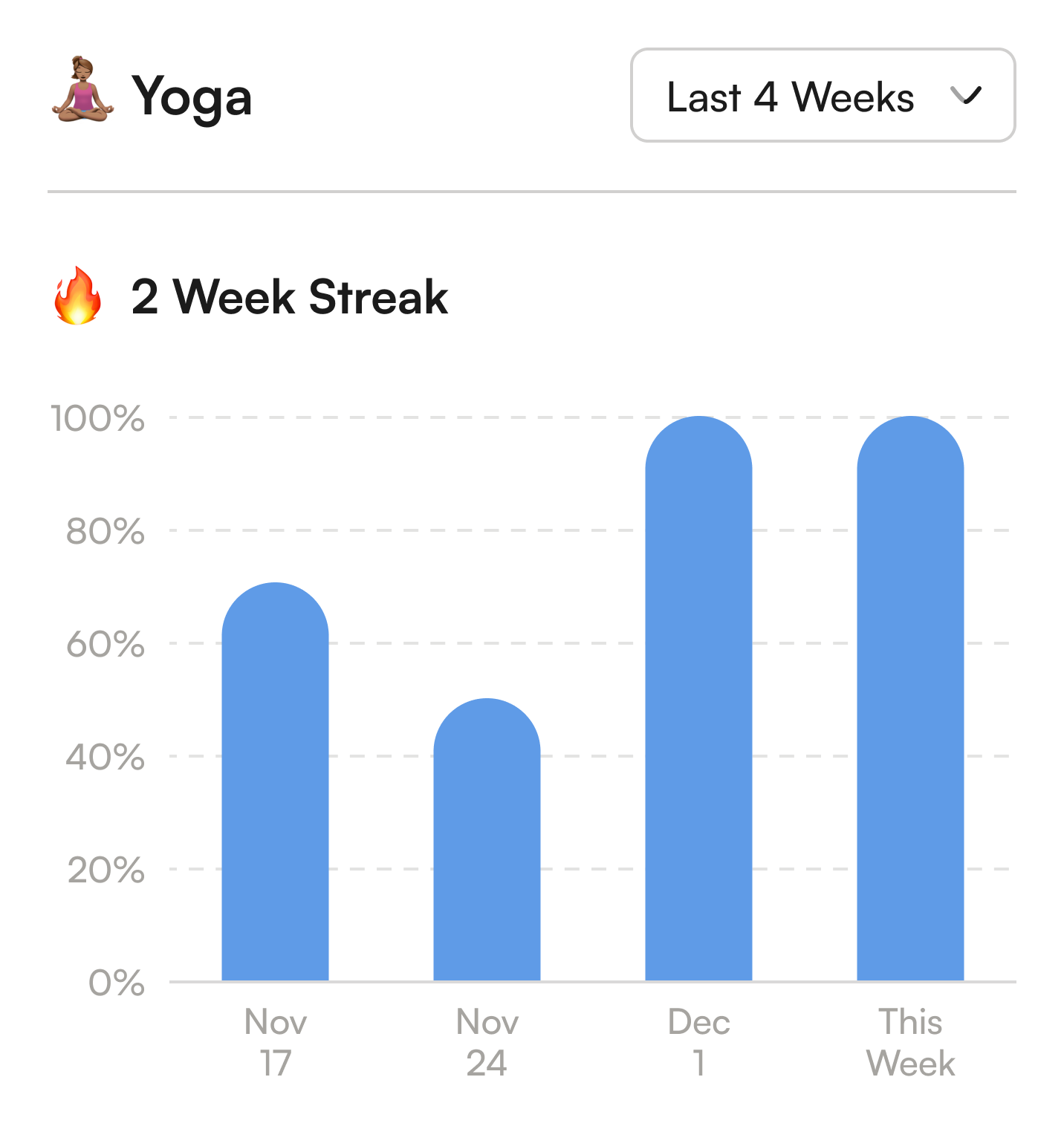
A streak is an uninterrupted sequence of consecutive days (or weeks) where you successfully complete a habit. Watching that number climb creates healthy momentum and motivation. But it’s important not to panic if you miss a single day, because it doesn’t wipe out your progress.
Real-world example: For the first time in two weeks, I missed a day of my journaling habit because I was stuck at the disco. I’ll start a new streak tomorrow.
System
(SIS-tum) | noun
A system is a collection of daily processes and repeatable habits that consistently move you toward a desired result. Instead of obsessing over a single far-off target, focusing on your system ensures you make steady progress every day.
Real-world example: Priya uses a system of habit stacking and environmental cues to drink 64 ounces of water every day, without having to think about it.
Two-Minute Rule
(TOO-MIN-it ROOL) | noun
The Two-Minute Rule, popularized by author James Clear in Atomic Habits, says that any new habit should be shrunk down so it takes less than two minutes. By making it super easy to start – like reading just one page instead of a whole chapter – you master the art of showing up before worrying about major results.
Real-world example: Daniel wasn’t ready for long workouts yet, so he followed the Two-Minute Rule and started with simple elbow stretches in the car.
Visualize
(VIZH-oo-uh-lyz) | verb
To visualize is to see your daily habit tracking clearly displayed as proof of your progress. This can include a completed checklist, a full calendar grid, or a colorful graph. Seeing your achievements – and your consistency – laid out in front of you makes your momentum feel tangible and motivates you to keep going.
Real-world example: Jennifer found it much easier to maintain new habits when she could visualize her progress. Checking the colorful graphs in the Sunny Habits app gave her an instant boost.
Weekly Goal
(WEEK-lee GOHL) | noun
A weekly goal is a short-term target for a seven-day period, breaking a larger ambition into smaller, more manageable chunks. After all, aiming to make a home-cooked dinner three times a week feels less intimidating (and more achievable) than learning a cookbook full of recipes.
Real-world example: When I finish my fourth morning walk of the week, I love knowing I’ve hit my weekly goal.
Start your habit journey with the free Sunny Habits app. Available now for iPhone and Android.